Foods That Contain Olestra: A Comprehensive Guide
Olestra, also known by its brand name Olean, is a fat substitute that adds no calories, fat, or cholesterol to food products. It was developed by Procter & Gamble in 1968 and approved by the Food and Drug Administration (FDA) for use in snack foods in 1996. While it offers benefits like reducing fat intake, understanding which foods that contain olestra is crucial due to its potential side effects. This article provides a comprehensive guide to foods that contain olestra, its effects, and considerations for consumption.
What is Olestra?
Olestra is a synthetic fat molecule created by bonding fatty acids to sucrose (table sugar). Unlike regular fats, olestra is not absorbed by the body because its molecule is too large for digestive enzymes to break down. This lack of absorption means it contributes zero calories or fat to the diet. The primary appeal of olestra is its ability to provide the taste and texture of fat without the associated health concerns of calorie and fat intake. It is often used in the production of fat-free or reduced-fat snack foods that contain olestra.
Common Foods That Contain Olestra
When olestra first hit the market, it was primarily used in a range of snack foods. Here are some of the most common categories and examples of foods that contain olestra:
- Potato Chips: Reduced-fat potato chips were among the first and most popular foods that contain olestra. Brands like Lay’s and Pringles offered versions using olestra to cut down on fat content.
- Crackers: Certain types of crackers, particularly those marketed as low-fat, sometimes contained olestra. These were designed to offer a lighter alternative to traditional, higher-fat crackers.
- Tortilla Chips: Similar to potato chips, tortilla chips also saw olestra-containing versions aimed at health-conscious consumers.
- Other Snack Foods: Other snack items, such as some types of pretzels and baked goods, occasionally used olestra to reduce fat content.
It’s important to carefully read the labels of snack foods that contain olestra to identify if a product contains olestra. Manufacturers are required to list olestra as an ingredient on the packaging.
Why Was Olestra Used?
The primary reason for using olestra in food products was to offer consumers lower-fat alternatives to their favorite snacks. In the late 20th century, there was growing awareness of the health risks associated with high-fat diets, including obesity, heart disease, and high cholesterol. Olestra provided a way for manufacturers to create products that appealed to health-conscious consumers without sacrificing the taste and texture of fatty foods that contain olestra.
Potential Side Effects of Olestra
Despite its benefits, olestra has been associated with several potential side effects, which led to some controversy and changes in its usage. The most commonly reported side effects include:
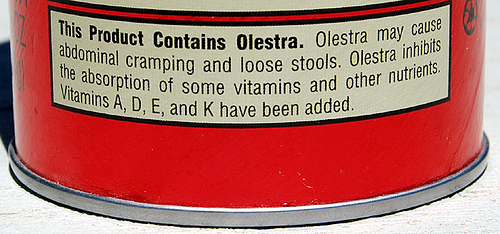
- Gastrointestinal Issues: Because olestra is not absorbed by the body, it can cause gastrointestinal distress, including abdominal cramping, bloating, and gas. These symptoms can be uncomfortable and, in some cases, quite severe.
- Anal Leakage: One of the more embarrassing side effects of olestra consumption is anal leakage or oily stools. This occurs because the unabsorbed olestra passes through the digestive system and can lubricate the rectum.
- Inhibition of Nutrient Absorption: Olestra can interfere with the absorption of fat-soluble vitamins (A, D, E, and K) and carotenoids. These nutrients are essential for various bodily functions, and their reduced absorption can lead to deficiencies over time.
Due to these potential side effects, the FDA initially required foods that contain olestra to carry a warning label. However, this requirement was later removed as more data became available, and manufacturers began adding vitamins to foods that contain olestra to compensate for the potential nutrient loss.
Current Availability of Olestra-Containing Foods
While olestra was once widely used in snack foods, its popularity has declined over the years due to consumer concerns about side effects and the availability of other fat substitutes. As of today, it’s less common to find foods that contain olestra compared to the late 1990s and early 2000s. However, it is still used in some products, particularly reduced-fat snack foods. Consumers should carefully check the ingredient lists of foods that contain olestra if they are concerned about olestra consumption.
Alternatives to Olestra
Given the potential side effects of olestra, many consumers and manufacturers have sought alternatives for reducing fat content in food products. Some common alternatives include:
- Modified Food Starches: These can provide a similar texture to fat in some applications and are generally considered safe.
- Gums and Fiber: Ingredients like cellulose gum and dietary fiber can add bulk and texture to foods that contain olestra, helping to reduce the need for fat.
- Protein-Based Fat Replacers: These use modified proteins to mimic the properties of fat.
- Other Fat Substitutes: Several other fat substitutes are available, each with its own set of properties and potential side effects.
Health Considerations and Recommendations
If you are considering consuming foods that contain olestra, it’s essential to be aware of the potential side effects and take appropriate precautions. Here are some recommendations:
- Read Labels Carefully: Always check the ingredient list of foods that contain olestra to determine if a product contains olestra.
- Start with Small Portions: If you are new to olestra, start with small portions to see how your body reacts.
- Stay Hydrated: Drinking plenty of water can help mitigate some of the gastrointestinal side effects associated with olestra.
- Maintain a Balanced Diet: Ensure you are consuming a balanced diet rich in vitamins and minerals to compensate for any potential nutrient absorption issues.
- Consult a Healthcare Professional: If you have any concerns about olestra or experience severe side effects, consult a healthcare professional.
The Future of Fat Substitutes
The story of olestra highlights the ongoing quest for effective and safe fat substitutes. While olestra had its moment in the spotlight, its limitations have paved the way for the development of new and improved alternatives. The future of fat substitutes likely involves a combination of technologies, including:
- Improved Fat Substitutes: Researchers are continually working on developing fat substitutes with fewer side effects and better nutritional profiles.
- Innovative Food Processing Techniques: New techniques can help reduce the fat content of foods without relying on substitutes.
- Consumer Education: Educating consumers about healthy eating habits and portion control can reduce the demand for high-fat foods in the first place.
Conclusion
Olestra remains a fascinating case study in the world of food science and nutrition. While foods that contain olestra once promised a guilt-free way to enjoy snack foods, the potential side effects have tempered its popularity. As consumers become more informed and manufacturers develop better alternatives, the landscape of fat substitutes will continue to evolve. By staying informed and making mindful choices, individuals can enjoy a balanced diet without sacrificing taste or health. Always consider the potential effects of foods that contain olestra before consumption. [See also: Healthy Snack Alternatives] [See also: Understanding Food Labels]
